
Introduction: Why These Local SEO Tips Matter for Your Business
If potential customers can’t find your business when they search locally, you’re leaving money on the table. Local searches drive 78% of mobile queries that result in offline purchases, yet many businesses struggle to appear in local search results when customers need them most. These local SEO tips address that critical gap.
Local SEO has evolved dramatically from simple directory listings to sophisticated optimization strategies that determine whether your business appears in Google’s coveted Local Pack, generates phone calls, and attracts foot traffic. With “near me” searches growing 900% over the past two years, mastering local search visibility has never been more essential for business success.
This comprehensive guide provides 40 actionable local SEO tips that deliver measurable results in 2025. Whether you operate a single location or manage multiple branches, these strategies help you dominate local search results, outrank competitors, and connect with customers actively seeking your products or services.
The best part? Many of these local SEO tips require minimal technical expertise but generate substantial visibility improvements. From optimizing your Google Business Profile to building local citations and managing online reputation, this guide covers everything you need to establish powerful local search presence.
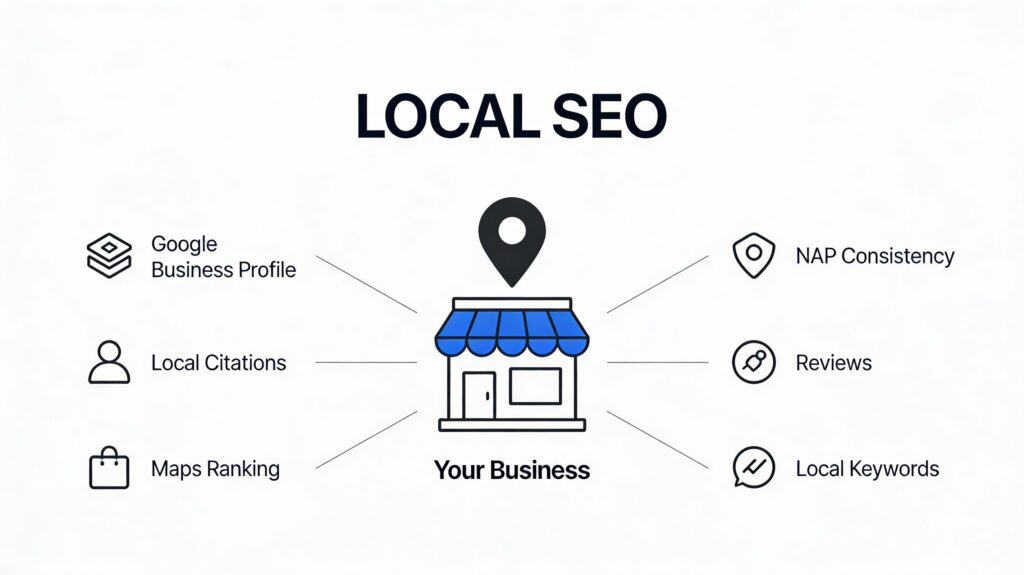
Understanding Local SEO
Local SEO optimizes your online presence to attract customers from relevant local searches. When someone searches for “coffee shop near me,” “emergency plumber Chicago,” or “dentist in Brooklyn,” local SEO determines whether your business appears prominently in results.
Google’s local search algorithm evaluates three primary factors when determining local rankings: relevance measures how well your business matches search queries, distance calculates geographic proximity between searchers and businesses, and prominence assesses your business’s overall authority based on reviews, citations, and online reputation.
These local SEO tips address all three ranking factors systematically. By implementing these strategies, you strengthen the signals Google uses to determine local search visibility. The result is improved rankings in both the Local Pack (the map results showing three businesses) and organic search results below the map.
Local SEO differs from traditional SEO in its geographic focus. While standard SEO targets broad audiences regardless of location, local SEO specifically attracts nearby customers ready to visit your location or purchase your services. This geographic specificity makes local SEO extraordinarily valuable for businesses serving specific areas.
Part 1: Google Business Profile Optimization
Your Google Business Profile represents your single most important local SEO asset. These local SEO tips for GBP optimization form the foundation of local search success.
1. Claim and Verify Your Google Business Profile
Many businesses lose visibility simply because they haven’t claimed their Google Business Profile. Search for your business on Google Maps to see if a profile exists. If one appears, claim ownership through the verification process. If no profile exists, create one through the Google Business Profile dashboard.
Verification typically requires receiving a postcard with a verification code at your business address. Some businesses qualify for phone or email verification. Complete verification promptly, as unverified profiles receive limited visibility in local search results.
2. Complete Every Profile Section
Incomplete Google Business Profiles signal low effort and reduce ranking potential. Fill out every available section including business name, address, phone number, website URL, business category, business hours, services offered, and business description.
The description section allows 750 characters to explain your business, services, and unique value propositions. Include your primary service keywords and location naturally without keyword stuffing. Write for potential customers first while incorporating relevant local search terms.
3. Choose Accurate Primary and Secondary Categories
Google Business Profile categories determine which searches your profile appears in. Select the primary category that most accurately describes your core business function. Many businesses overlook secondary categories, missing opportunities to appear in related searches.
Add all relevant secondary categories that apply to your business. A restaurant might include categories like “Italian restaurant,” “pizza restaurant,” and “wine bar” if applicable. Each additional relevant category expands the search queries you’re eligible to rank for.
4. Add High-Quality Photos and Videos
Profiles with photos receive 42% more requests for driving directions and 35% more website clicks than profiles without images. Upload high-quality photos showcasing your location exterior and interior, products or services, team members, and business atmosphere.
Include a professional logo and cover photo that represents your brand effectively. Update photos regularly to demonstrate active business management. Video content generates even higher engagement, so consider adding brief videos highlighting your business, services, or customer testimonials.
5. Create and Optimise Service Pages
The services section allows you to list specific offerings with individual descriptions. Create detailed service listings for each major service you provide. Include relevant keywords in service names and descriptions naturally.
For service area businesses without physical locations customers visit, accurately define service areas. Specify cities, zip codes, or radius around your location. Overly broad service areas may reduce rankings for specific locations.
6. Keep Business Hours Accurate
Inaccurate business hours frustrate customers and damage trust. Keep regular hours updated and add special hours for holidays. Use the “temporarily closed” designation during closures rather than deleting your profile.
Google often displays business hours directly in search results. Incorrect hours displayed prominently can drive potential customers to competitors with accurate information readily available.
7. Enable and Monitor Messaging
Google Business Profile messaging allows customers to contact you directly through Google Search and Maps. Enable this feature to capture leads who prefer messaging over phone calls.
Monitor messages actively and respond quickly. Fast response times improve customer satisfaction and signal to Google that your business provides good customer service, potentially influencing rankings.
8. Post Regular Updates
Google Business Profile posts appear in your profile and can drive engagement. Share updates about special offers, new products, events, or business news. Posts remain visible for seven days, so update weekly for consistent visibility.
Use posts strategically around promotions or seasonal offerings. Include clear calls-to-action and relevant images. While posts don’t directly impact rankings, they increase engagement, which correlates with improved local visibility.
9. Utilize Q&A Section Proactively
The Questions & Answers section allows customers to ask questions publicly. Don’t wait for customers to ask questions. Proactively post and answer common questions about your business, services, pricing, or policies.
This strategy serves double purposes: providing helpful information and incorporating additional keywords naturally. Monitor this section regularly and respond promptly to new questions with thorough, helpful answers.
10. Add Products (For Applicable Businesses)
If you sell products, use the Products section to showcase offerings with photos, descriptions, and prices. E-commerce businesses, retailers, and service businesses offering packages benefit from product listings.
Well-optimized product listings can appear in Google Shopping results, providing additional visibility beyond traditional local search results.
Part 2: Review Management and Reputation
Online reviews significantly influence both local rankings and customer decisions. These local SEO tips for review management build powerful reputation signals.
11. Develop Systematic Review Generation
Consistent review flow matters more than occasional review surges. Develop systems for requesting reviews from satisfied customers. Train staff to ask happy customers for reviews, send follow-up emails after service completion, or include review requests on receipts.
Make reviewing easy by providing direct links to your Google Business Profile review page. Shortened URLs or QR codes simplify the process, increasing review completion rates.
12. Respond to Every Review
Responding to reviews demonstrates commitment to customer satisfaction and provides opportunities to incorporate keywords naturally. Thank positive reviewers and address any specifics they mentioned. Respond to negative reviews professionally, acknowledging concerns and offering solutions.
Google evaluates review response rates when determining local rankings. Consistent response patterns signal active business management and customer service commitment.
13. Encourage Detailed Reviews
Reviews mentioning specific services, products, or location details provide more value than generic praise. When requesting reviews, suggest customers mention specific aspects of their experience without explicitly telling them what to write.
Detailed reviews naturally incorporate keywords and phrases that help Google understand your business offerings and relevance for various searches.
14. Diversify Review Platforms
While Google reviews matter most for local search rankings, reviews on industry-specific platforms and general review sites like Yelp strengthen overall online reputation. Encourage reviews on relevant platforms where customers research businesses in your industry.
Diverse review presence across multiple platforms demonstrates legitimate popularity and trustworthiness, indirectly supporting local SEO efforts.
15. Address Negative Reviews Constructively
Negative reviews provide opportunities to demonstrate excellent customer service publicly. Respond quickly, acknowledge the customer’s experience, apologize for any shortcomings, and offer to make things right.
Taking conversations offline by providing contact information shows willingness to resolve issues personally. Prospective customers evaluate how businesses handle complaints, making professional responses valuable for reputation management.
16. Never Buy Fake Reviews
Fake reviews violate Google’s policies and risk severe penalties including profile suspension. Focus on generating authentic reviews from real customers. Quality matters far more than quantity when reviews come from genuine experiences.
Google’s algorithms detect unnatural review patterns. Sudden review surges, generic review text, or reviews from accounts with suspicious activity trigger investigations that can permanently damage your local search presence.
Part 3: Local Citations and NAP Consistency
Citations are online mentions of your business name, address, and phone number. These local SEO tips for citation building strengthen local ranking signals.
17. Build Citations on Major Directories
Submit your business to major directories including Yelp, Bing Places, Apple Maps, Facebook Business, and industry-specific directories relevant to your business type. These authoritative citations provide foundational local SEO signals.
Prioritize directories that customers actually use when researching businesses. Local chamber of commerce websites, industry trade association directories, and geographic-specific directories offer valuable citations.
18. Maintain Perfect NAP Consistency
Inconsistent business information across citations confuses search engines and weakens local ranking signals. Ensure your business name, address, and phone number appear identically across every citation.
Pay attention to details like suite numbers, street abbreviations, and phone number formatting. “Street” versus “St.” or “Suite 100” versus “#100” represent inconsistencies that reduce citation effectiveness.
19. Audit Existing Citations
Many businesses have citations they didn’t create, sometimes with outdated or incorrect information. Use citation audit tools to identify existing citations across the web. Update incorrect information and claim profiles where possible.
Correcting inaccurate citations often delivers quick ranking improvements by eliminating conflicting information that previously confused search engines about your business details.
20. Get Listed in Local Business Associations
Chamber of commerce memberships, business improvement districts, and local trade organizations often provide directory listings. These citations carry significant weight because they verify legitimate local business operations.
Membership benefits often extend beyond citations to networking and promotion opportunities that indirectly support local SEO through increased brand awareness and potential backlink opportunities.
21. Leverage Government and Educational Citations
Citations from government websites (.gov) and educational institutions (.edu) provide exceptional authority. Register with local business licensing directories, economic development resources, or relevant government programs that include business directories.
These citations signal strong legitimacy and local roots, both valuable factors in local search algorithms.
Part 4: Website Optimization for Local Search
Your website must reinforce local relevance. These local SEO tips for on-site optimization ensure your website supports local ranking efforts.
22. Create Location-Specific Landing Pages
Businesses serving multiple locations need dedicated landing pages for each service area. Create unique pages featuring the specific location name, address, phone number, custom content about that location, local testimonials, and area-specific service information.
Avoid creating duplicate content by ensuring each location page offers unique value, such as location-specific service details, local team introductions, or area-specific tips.
23. Optimize Title Tags and Meta Descriptions
Include your city or service area in title tags and meta descriptions for important pages. Format titles like “Service Name + Location | Business Name” to clearly signal local relevance.
Meta descriptions should mention your location naturally while encouraging clicks. These elements don’t directly impact rankings but improve click-through rates from local search results.
24. Implement Local Schema Markup
Local Business schema markup provides search engines with structured data about your business. Include details like business name, address, phone number, business hours, accepted payment methods, and geographic coordinates.
Use schema.org’s LocalBusiness schema type or more specific variations like “Restaurant,” “AutoRepair,” or “Dentist” when applicable. Proper schema implementation can result in enhanced search listings with rich snippets.
25. Embed Google Maps on Contact Pages
Embedding interactive Google Maps on your contact or location pages improves user experience while reinforcing your location signals. The embedded map provides easy directions while demonstrating your verified physical location.
Ensure the embedded map matches your exact Google Business Profile location to maintain consistency across all location signals.
26. Create Locally-Focused Content
Develop blog content addressing local topics, events, news, or community involvement. Content like “Best coffee shops in [City],” “Guide to [Local Event],” or “[City] small business spotlight” attracts local traffic while establishing community connection.
Locally-focused content naturally incorporates location keywords while providing value that attracts links from local websites, amplifying local SEO benefits.
27. Optimize for “Near Me” Searches
“Near me” searches account for substantial local search volume. Optimize content for these queries by including natural variations like “open now,” “closest,” “nearby,” or location-specific terms.
Technical optimization ensuring accurate location detection through IP addresses and GPS coordinates helps your business appear in “near me” results when relevant.
28. Ensure Mobile Responsiveness
Mobile devices generate the majority of local searches. Websites must provide excellent mobile experiences with fast loading, easy navigation, click-to-call buttons, and readable content without zooming.
Google’s mobile-first indexing means mobile website performance directly impacts rankings. Test your website on actual mobile devices and address any usability issues immediately.
29. Add Location to All Contact Information
Display your complete NAP information prominently on every website page, typically in the header or footer. This consistent display reinforces your location for both users and search engines.
For service area businesses without physical locations customers visit, clearly communicate service areas without listing fake addresses that violate Google’s guidelines.
Part 5: Link Building for Local SEO
Local backlinks strengthen domain authority while signaling geographic relevance. These local SEO tips for link building focus on location-specific link opportunities.
30. Partner with Local Businesses
Form relationships with complementary local businesses for cross-promotion opportunities. Link exchanges, co-marketing initiatives, or joint events create natural linking opportunities while expanding customer reach.
Feature partners on your website and request reciprocal links. While reciprocal linking alone provides limited value, genuine partnerships create authentic link relationships that benefit both businesses.
31. Sponsor Local Events and Organizations
Sponsoring community events, sports teams, charities, or local organizations generates backlinks from their websites. Sponsorships demonstrate community involvement while earning links from locally-relevant sources.
Event websites, nonprofit partner pages, and recognition listings provide diverse local backlink opportunities that strengthen geographic authority signals.
32. Get Featured in Local Media
Build relationships with local journalists, bloggers, and media outlets. Pitch story ideas, offer expert commentary on local issues related to your industry, or share newsworthy business developments.
Media coverage generates high-authority backlinks while increasing brand awareness. Local news websites carry significant SEO weight for local searches.
33. Join Local Business Directories
Beyond major directories, identify niche and hyperlocal directories specific to your area. Neighborhood directories, local business listing sites, and community resource pages provide geographically-relevant citations and backlinks.
Quality matters more than quantity. Focus on legitimate directories that real people use rather than low-quality link farms.
34. Create Local Resource Content
Develop comprehensive local resources that naturally attract links. City guides, local event calendars, neighborhood information, or area business directories become linkable assets other local websites reference.
High-quality local content often gets shared by chambers of commerce, tourism sites, local bloggers, and community organizations, generating valuable local backlinks.
Part 6: Social Media for Local Visibility
Social signals support local SEO indirectly through increased visibility and engagement. These local SEO tips leverage social platforms for local reach.
35. Optimize Social Profiles with Local Information
Include complete NAP information on all social media profiles. Use consistent business names, locations, and contact details matching your website and Google Business Profile.
Select local audience targeting in platform settings where available. Geographic targeting ensures your content reaches nearby users most likely to become customers.
36. Engage with Local Social Media Communities
Join local Facebook groups, follow local Instagram accounts, and engage with community discussions. Provide helpful advice, share local content, and build relationships authentically rather than constantly self-promoting.
Active community participation increases local brand awareness and creates opportunities for organic mentions and links as community members discover your business.
37. Use Location Tags and Geotags
Tag your location in social media posts using built-in geotagging features. Location tags increase content visibility to users browsing location-specific feeds and help platforms understand your geographic focus.
Encourage customers to tag your location in their posts. User-generated content featuring your location strengthens local social signals while providing authentic testimonials.
38. Share Local News and Events
Position your business as a community hub by sharing relevant local news, upcoming events, or community initiatives. This content resonates with local audiences while reinforcing your local presence across platforms.
Balancing promotional content with valuable local information builds engaged audiences more likely to interact with your posts and visit your business.
Part 7: Tracking and Measuring Local SEO Success
Monitoring performance identifies what works and reveals improvement opportunities. These local SEO tips for measurement ensure data-driven optimization.
39. Monitor Google Business Profile Insights
Google Business Profile Insights shows how customers find your profile, actions they take, and where they come from. Track metrics including search queries, profile views, website clicks, direction requests, and phone calls.
Identify trends over time and correlate changes with optimization efforts. Increasing direction requests and calls indicate improving local visibility and customer action.
40. Track Local Keyword Rankings
Use rank tracking tools to monitor positions for target local keywords. Track rankings for city-specific terms, “near me” variations, and service + location combinations relevant to your business.
Focus on Local Pack rankings (the map results) separately from organic rankings. Improvement in either position type indicates successful local SEO efforts.
Common Local SEO Mistakes to Avoid
Understanding what not to do prevents wasted effort and potential penalties. Avoid these common mistakes when implementing local SEO tips:
Using Fake Business Addresses violates Google’s guidelines and risks profile suspension. Service area businesses should never list fake office addresses to appear in areas they serve. Define service areas properly instead.
Keyword Stuffing Business Names like “Joe’s Pizza Chicago Best Deep Dish Near Me” triggers penalties. Use your legitimate business name exactly as it appears on your storefront and legal documents.
Neglecting Review Responses signals poor customer service. Respond to all reviews, positive and negative, to demonstrate engagement and build trust with prospective customers.
Inconsistent NAP Information across citations confuses search engines and dilutes ranking signals. Audit and standardize business information across all online platforms.
Ignoring Mobile Experience loses the majority of local searchers who use mobile devices. Ensure fast, responsive mobile website performance.
Creating Duplicate Location Pages with identical content wastes crawl budget and creates thin content issues. Make each location page unique and valuable.
Buying Fake Reviews violates platform policies and risks severe penalties including profile removal. Focus on generating authentic reviews from real customers.
Neglecting Local Content means missing opportunities to rank for location-specific searches and build topical authority in your area.
Advanced Local SEO Tips
Once you’ve mastered fundamental strategies, these advanced local SEO tips provide additional competitive advantages.
Optimize for Voice Search by targeting conversational, question-based keywords. Voice searches often include phrases like “where can I find,” “what’s the best,” or “which business near me” that require natural language optimization.
Implement Advanced Schema Types including FAQ schema, Service schema, and Review schema to enhance search listings with rich snippets that improve click-through rates.
Create Local Landing Pages for Services not just locations. Develop pages targeting “service + location” combinations like “emergency plumbing Chicago” or “cosmetic dentist Brooklyn” to capture high-intent local searches.
Leverage Google Posts Strategically around events, promotions, or seasonal offerings. While posts provide temporary visibility, they increase engagement and demonstrate active profile management.
Build Location Authority Through Content Clusters by creating comprehensive coverage of local topics. Develop pillar content about your location with supporting articles addressing specific local questions or interests.
Monitor Competitor Strategies to identify citation sources, review platforms, or content topics you haven’t explored. Competitive analysis reveals gaps in your local SEO strategy.
Optimize for Google’s Local Services Ads in eligible industries. While these are paid listings, they appear prominently and include Google’s guaranteed badge, building trust while driving leads.
Tools for Implementing Local SEO Tips
Effective local SEO requires tools that streamline monitoring and optimization:
Google Business Profile Dashboard provides free management and insights for your profile. Monitor performance, respond to reviews, and update information regularly.
Google Search Console shows how your website performs in search, including queries driving traffic and technical issues affecting visibility. Filter data by geographic regions to focus on local performance.
Local Citation Tools like BrightLocal, Moz Local, or Whitespark help build citations, audit existing listings, and maintain NAP consistency across platforms.
Review Management Platforms like Birdeye, Podium, or Grade.us streamline review generation, monitoring, and response across multiple review platforms from centralized dashboards.
Rank Tracking Tools like LocalFalcon, Local Viking, or GeoRanker specifically track local pack rankings across different locations to monitor visibility in your service areas.
Google Analytics tracks website traffic from local searches, behavior of local visitors, and conversions from local campaigns. Set up geographic reports to analyze local performance specifically.
The Future of Local SEO
Local SEO Tips-Local search continues evolving with technology and user behavior changes. Anticipate these trends shaping future local SEO tips:
AI and Conversational Search increasingly influence how users discover local businesses. Optimize for natural language queries and question-based searches that match conversational search patterns.
Visual Search Growth means ensuring high-quality images properly optimized with descriptive file names and alt text. Google Lens and visual search features help users discover businesses through image searches.
Hyperlocal Targeting becomes more precise as search engines better understand user location and intent. Neighborhood-level optimization gains importance over city-level targeting.
Augmented Reality Integration will allow users to discover businesses through AR experiences. Early adoption of AR features provides competitive advantages as these technologies mature.
Review Authenticity Verification improves as platforms develop better fake review detection. Focus on generating authentic reviews rather than manipulating review systems.
Zero-Click Local Searches increase as Google displays more information directly in search results. Optimize for featured snippets, knowledge panels, and direct answer formats to maintain visibility.
Conclusion: Your Local SEO Tips and Action Plan
These 40 local SEO tips provide comprehensive strategies for dominating local search in 2025. Local SEO success requires consistent effort across multiple channels, but the rewards of increased visibility, more qualified leads, and business growth make the investment worthwhile.
Start by prioritizing high-impact local SEO tips like claiming and optimizing your Google Business Profile, building systematic review generation, and ensuring perfect NAP consistency across major citations. These foundational elements deliver quick wins while establishing the groundwork for advanced strategies.
Implement local SEO tips systematically rather than attempting everything simultaneously. Focus on three to five strategies monthly, master them, then expand to additional tactics. This measured approach ensures quality implementation and prevents overwhelm.
Remember that local SEO combines technical optimization with genuine community engagement. The most successful local businesses don’t just optimize for algorithms; they provide exceptional experiences that generate authentic reviews, earn natural links, and build strong local reputations.
Track your progress using the metrics outlined in these local SEO tips. Monitor rankings, profile insights, website traffic, and most importantly, actual business results like phone calls, directions requests, and sales. Data-driven optimization ensures your efforts focus on strategies delivering measurable returns.
Local search competition intensifies as more businesses recognize local SEO’s value. Implementing these local SEO tips positions you ahead of competitors still neglecting local optimization or using outdated strategies that no longer work.
Your commitment to mastering these local SEO tips determines whether customers find your business when they search or discover competitors instead. Start implementing these strategies today to build the local search dominance that drives sustainable business growth tomorrow.
The businesses winning local search in 2025 didn’t achieve those results through luck. They systematically applied proven local SEO tips, maintained consistent optimization efforts, and prioritized customer experiences that generate the authentic signals search engines reward with top rankings. Your business can achieve the same success by following this roadmap.